
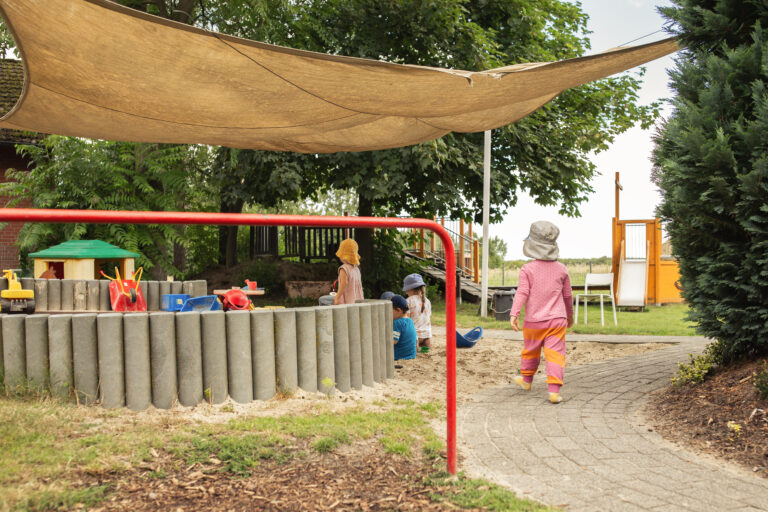
Summer gives young children more opportunities to move, explore, experiment and learn outdoors. The outdoor play benefits extend far beyond burning off energy. Regular active play can support physical development, communication, confidence, social skills, emotional wellbeing and early learning.
What Are the Main Play Benefits for Young Children?
It supports several areas of development at the same time. A child running across grass, for example, is not simply exercising. They are judging distance, adjusting their balance, making decisions, noticing their surroundings and potentially communicating with other children as they play.
Some of the most important benefits include:
- Improved balance, movement and coordination.
- Stronger muscles and bones through active movement.
- Greater confidence when attempting manageable challenges.
- Better social skills through shared games and cooperation.
- More opportunities for language and conversation.
- Sensory exploration using natural sights, sounds and textures.
- Increased independence as children make choices during play.
- Support for attention, learning and emotional wellbeing.
Government guidance also highlights that physical activity contributes to brain development and learning, builds relationships and social skills, supports movement and coordination, and can improve sleep.
How Does it Support Physical Development?
Movement is one of the clearest links between outdoor play and child development.
Outdoor environments naturally invite children to crawl, walk, run, climb, reach, throw, kick, push and pull. These movements help develop gross motor skills, which involve the larger muscles responsible for balance, posture and coordination.
For toddlers, simple activities can be particularly valuable. Walking over grass requires slightly different balance from walking on a smooth indoor floor. Stepping over a small obstacle requires the child to judge height and distance. Kicking a ball involves coordination between vision, balance and leg movement.
Which Activities Develop Gross Motor Skills?
Useful summer play ideas for children include:
- Walking along different surfaces such as grass, paths and soft play areas.
- Rolling or kicking a lightweight ball.
- Chasing bubbles across an open space.
- Crawling through supervised tunnels.
- Climbing age-appropriate playground equipment.
- Dancing outdoors to familiar songs.
- Carrying small buckets, watering cans or safe garden equipment.
These activities do not need to be formal exercise sessions. For young children, active play itself provides valuable physical practice.
How Does Outdoor Play Develop Fine Motor Skills?
The outdoors can also support smaller, more controlled hand movements.
Picking up leaves, transferring water between containers, drawing with chunky chalk or collecting safe natural objects all require children to use their fingers and hands carefully.
These movements contribute to the foundations needed for tasks such as feeding themselves, dressing, turning pages and, later, holding writing tools.
How Does Child Development Through Play Support Thinking and Learning?
Children learn most effectively when they can actively investigate their environment.
Outside spaces are full of opportunities for simple problem-solving. A child may need to work out how to move a large toy, build something from natural materials or retrieve a ball that has rolled somewhere unexpected.
These experiences encourage children to test ideas and learn from the outcome.
A simple question such as, “Which container holds more water?” can introduce early mathematical thinking. Looking for insects, clouds, leaves or different colours can support observation and vocabulary.
The UK Chief Medical Officers’ guidance recognises that physical activity contributes to brain development and learning in the early years.
Can Outdoor Play Help Social and Emotional Development?
Yes. Many benefits relate to how children learn to interact with other people and manage their emotions.
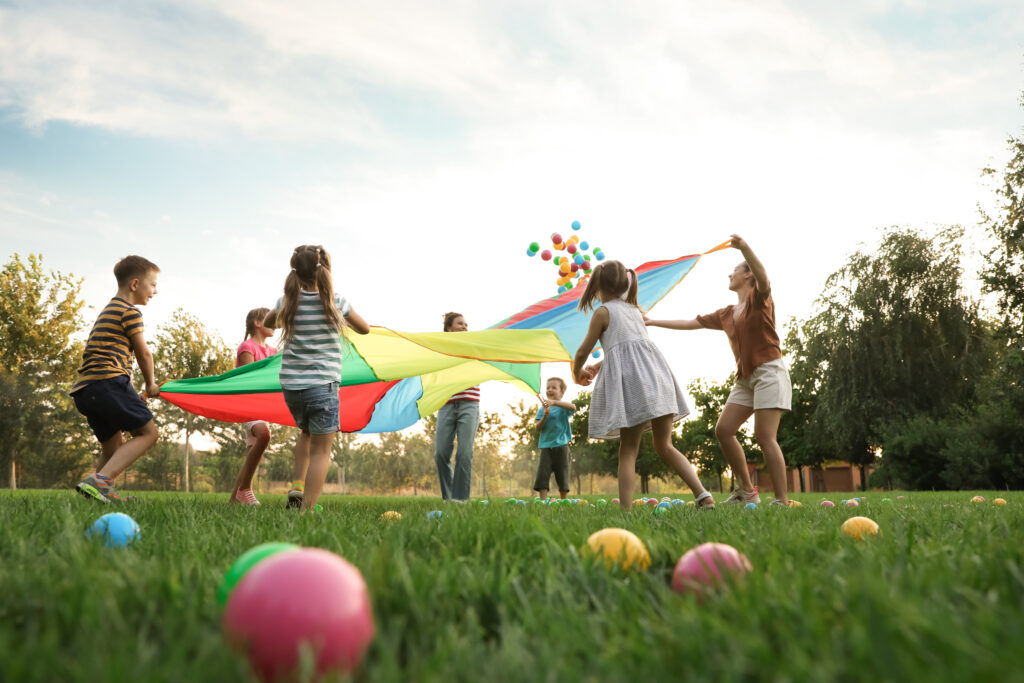
Shared play creates natural opportunities for turn-taking, cooperation and negotiation. Two toddlers wanting the same ball, for example, are beginning to encounter concepts such as waiting, sharing and communicating their needs.
They might choose which activity to try, decide where to explore or attempt a physical challenge independently. Achieving something that initially felt difficult can build confidence and persistence.
How Does Outdoor Play Build Confidence?
Confidence grows through repeated experiences of trying, adjusting and succeeding.
A child might initially need an adult’s hand while navigating a small step. Later, they may attempt it independently. The achievement might appear simple to an adult, but for the child it represents growing physical ability, judgement and self-belief.
Adults can support this process by allowing appropriate challenge rather than immediately solving every difficulty.
The aim is not risk-free play. It is supervised, age-appropriate play where children have opportunities to learn what their bodies can do.
How Does it Support Communication and Language?
Outdoor play provides children with things to notice and talk about.
A walk through a garden might introduce words such as leaf, flower, wet, dry, soft, rough, high, low, fast and slow. Repeatedly hearing these words in context helps children connect language with real experiences.
Songs, action games and imaginative outdoor play can also encourage children to communicate.

What Are Some Simple Summer Outdoor Activities for Children?
The best activities are often inexpensive and adaptable.
Young children rarely need elaborate equipment. Water, bubbles, balls, natural objects and open space can create plenty of opportunities for exploration.
Water Play
Provide shallow containers, cups, spoons and child-safe pouring equipment under close supervision.
Children can fill, empty, scoop and transfer water, building hand-eye coordination and learning simple concepts such as full, empty, more and less.
Bubble Chasing
Blowing bubbles encourages children to watch moving objects, reach, run and coordinate their movements.
For babies who are not yet mobile, watching bubbles can still provide interesting visual stimulation while an adult describes what they see.
Nature Collecting
Older toddlers can collect safe leaves, twigs or petals with an adult.
You can then sort them by size, texture or colour.
Always supervise closely and check anything a young child handles, particularly if they are still likely to put objects in their mouth.
Outdoor Painting
Use washable paints, water and brushes on appropriate outdoor surfaces.
Large movements with brushes can support shoulder and arm strength while children explore colour and cause and effect.
Ball Games
Rolling, throwing and kicking are straightforward summer play ideas for children that can be adapted to different abilities.
How Can Babies Benefit From Outdoor Play?
Babies do not need to be walking to experience the outdoors.
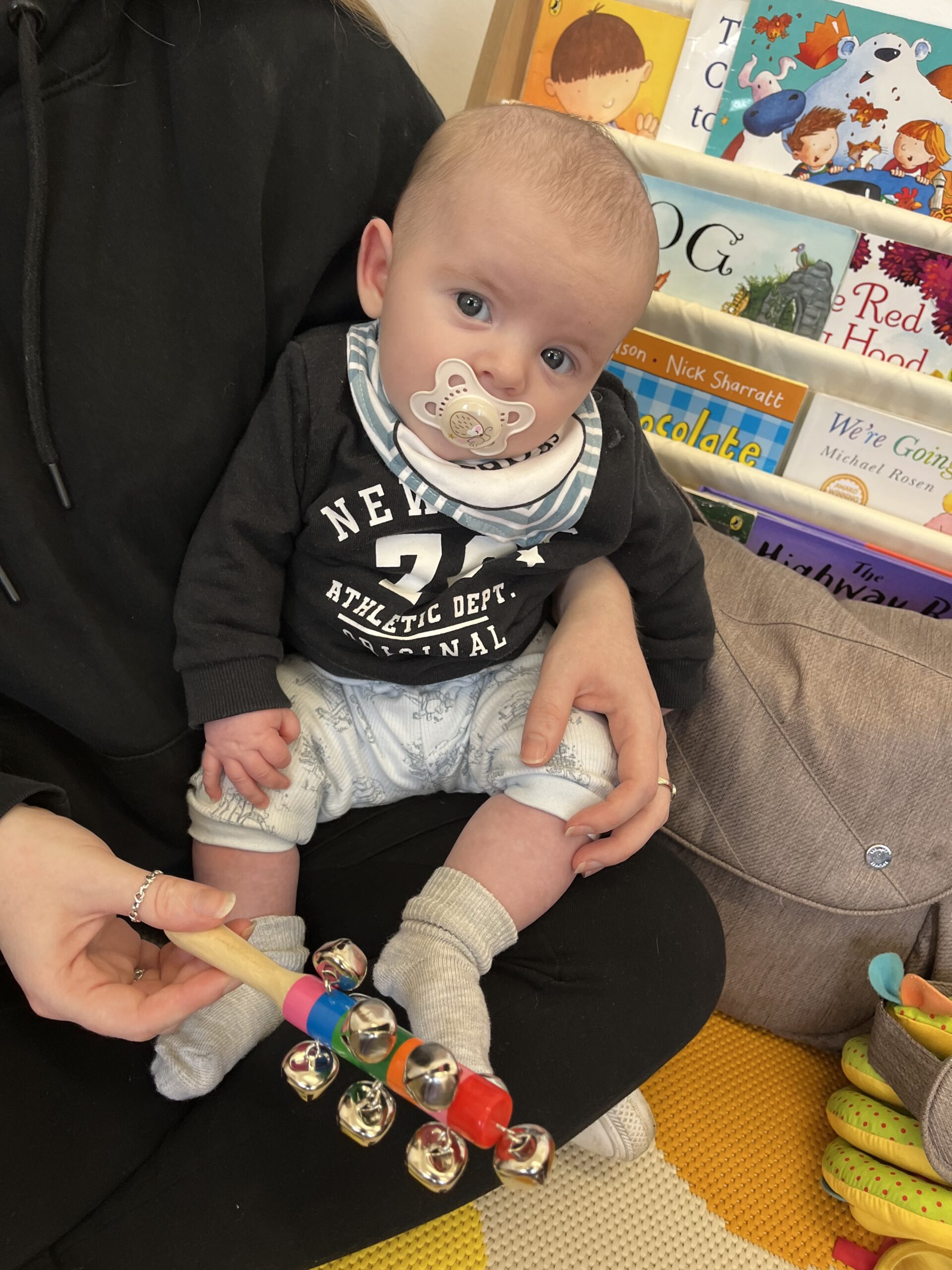
The NHS encourages babies to be physically active throughout the day in different ways. For babies who are not yet crawling, supervised floor play can include reaching, grasping, pushing, pulling and moving their head and limbs. At least 30 minutes of tummy time should be spread across the day while they are awake.
Outdoor experiences can include:
- Supervised tummy time on a suitable mat.
- Watching leaves move in the breeze.
- Listening to birds and everyday outdoor sounds.
- Reaching for safe sensory objects.
- Feeling different textures under close supervision.
- Looking at changing light, shadows and colours.
The activity should always reflect the baby’s individual developmental stage.
Families considering childcare for younger babies can read more about our Lilies baby and newborn room.
How Can Children Play Outdoors Safely in Summer?
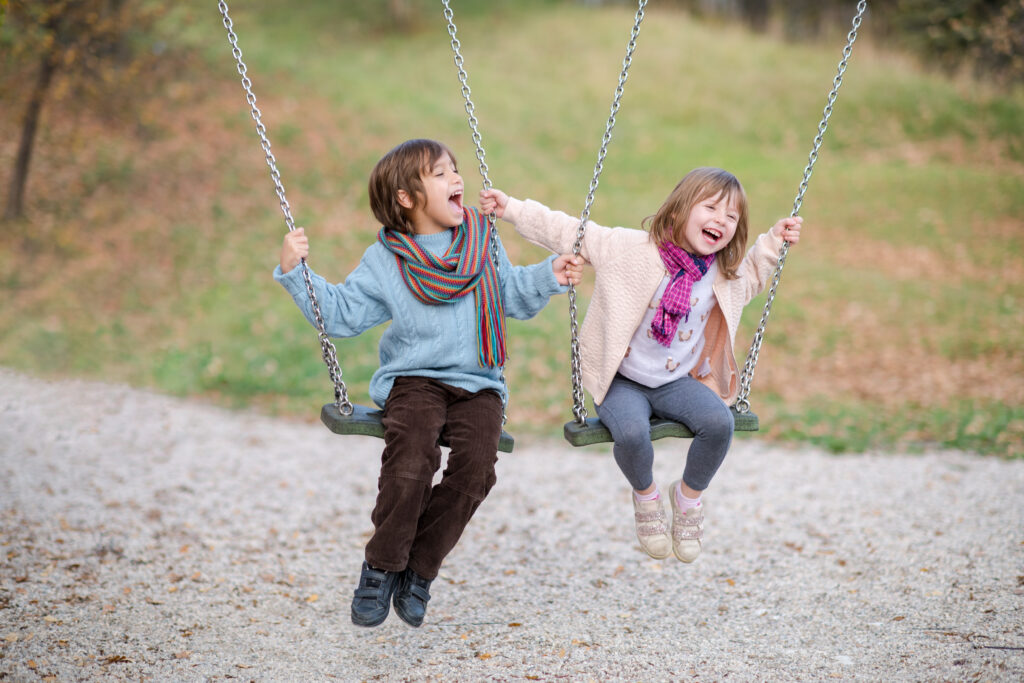
Summer brings valuable opportunities, but children also need protection from heat and strong sunlight.
Plan active play around weather conditions, provide access to drinking water and make use of shade where appropriate. Clothing should suit both the temperature and the activity.
Young children require close supervision around water, climbing equipment and unfamiliar natural objects.
Parents should also remember that UK summer weather can change quickly. It does not have to stop completely on cooler or cloudier days. Suitable clothing can help children continue exploring safely in a wider range of conditions.
For specific health or sun safety advice, follow current NHS guidance relevant to your child’s age and individual needs.
How Is Outdoor Play Used at Gosforth Nursery?
Outdoor activity forms part of everyday early years care at Gosforth Nursery.
Our January 2026 Ofsted inspection found that staff use the outdoor environment to help children develop physical, social and communication skills. Inspectors observed toddlers interacting with one another outdoors and practising sharing and turn-taking. The report also noted that an increased focus on physical development had created more opportunities for children to practise movement skills.
Outdoor play sits alongside stories, songs, creative activities, meals, rest and age-appropriate learning experiences throughout the nursery day.
Families can explore our nursery rooms and age-specific environments to learn more about how experiences change as children grow.

How Can You Make the Most of Outdoor Play This Summer?
The biggest benefits often come from consistency rather than elaborate activities.
Give your child regular opportunities to move, explore and follow their curiosity. Talk about what they notice. Allow them to repeat favourite activities, because repetition helps young children practise skills and build confidence.
Try varying experiences across the week. One day might involve water play, another could involve a walk, ball games or collecting natural objects.
Most importantly, choose activities that suit your child’s age, development and interests.
It does not need to look impressive to be valuable. A toddler repeatedly filling and emptying a bucket may be practising coordination, concentration, problem-solving and language all at once.
Supporting Your Child’s Development All Year Round
Summer offers an excellent opportunity to introduce more active, sensory and exploratory play into your child’s routine.
At Gosforth Nursery, outdoor experiences are combined with nurturing relationships, age-appropriate activities and familiar routines to support children throughout the early years.
If you are exploring nursery care and would like to see how play, learning and daily routines work in practice, our team would be happy to show you around.